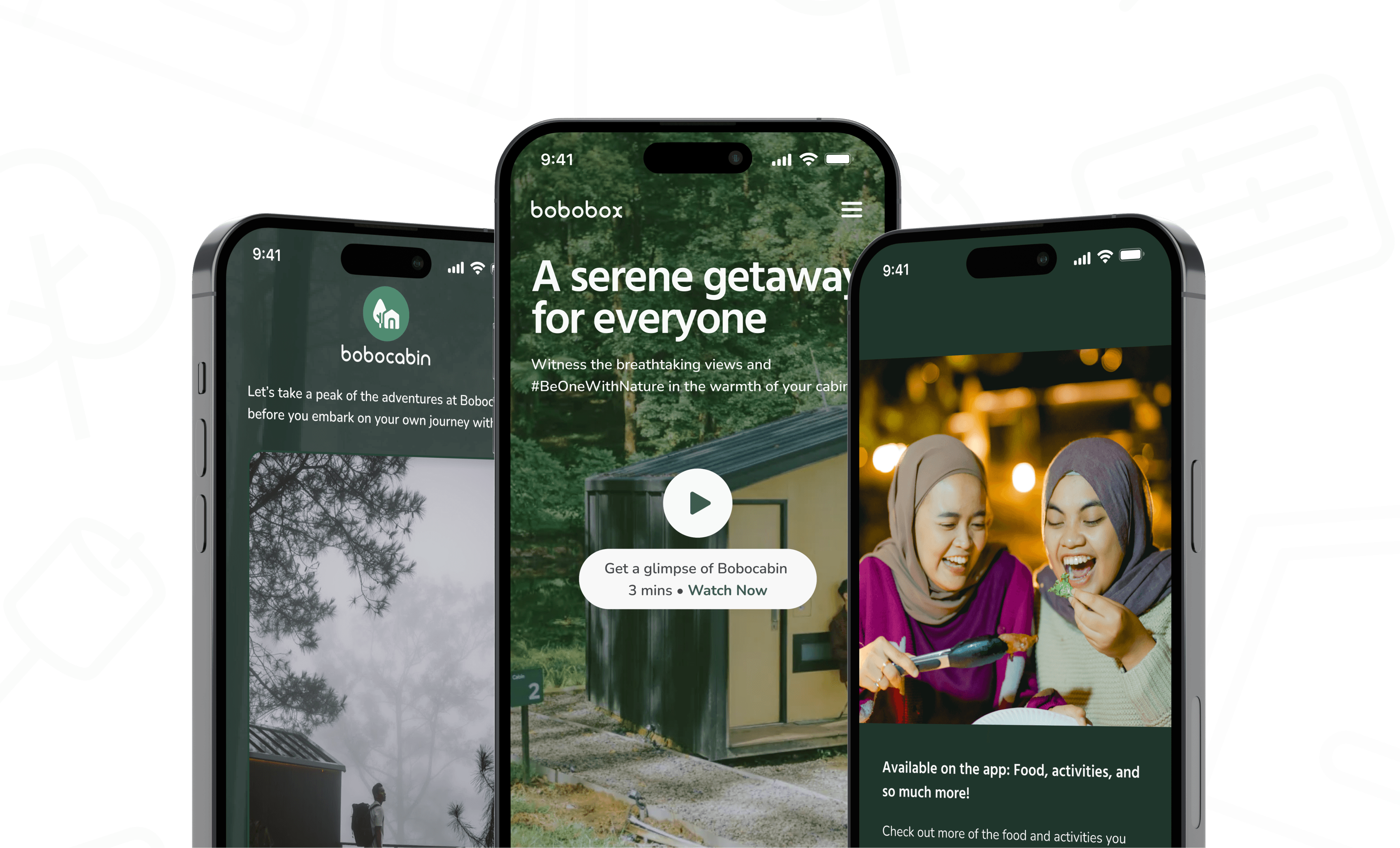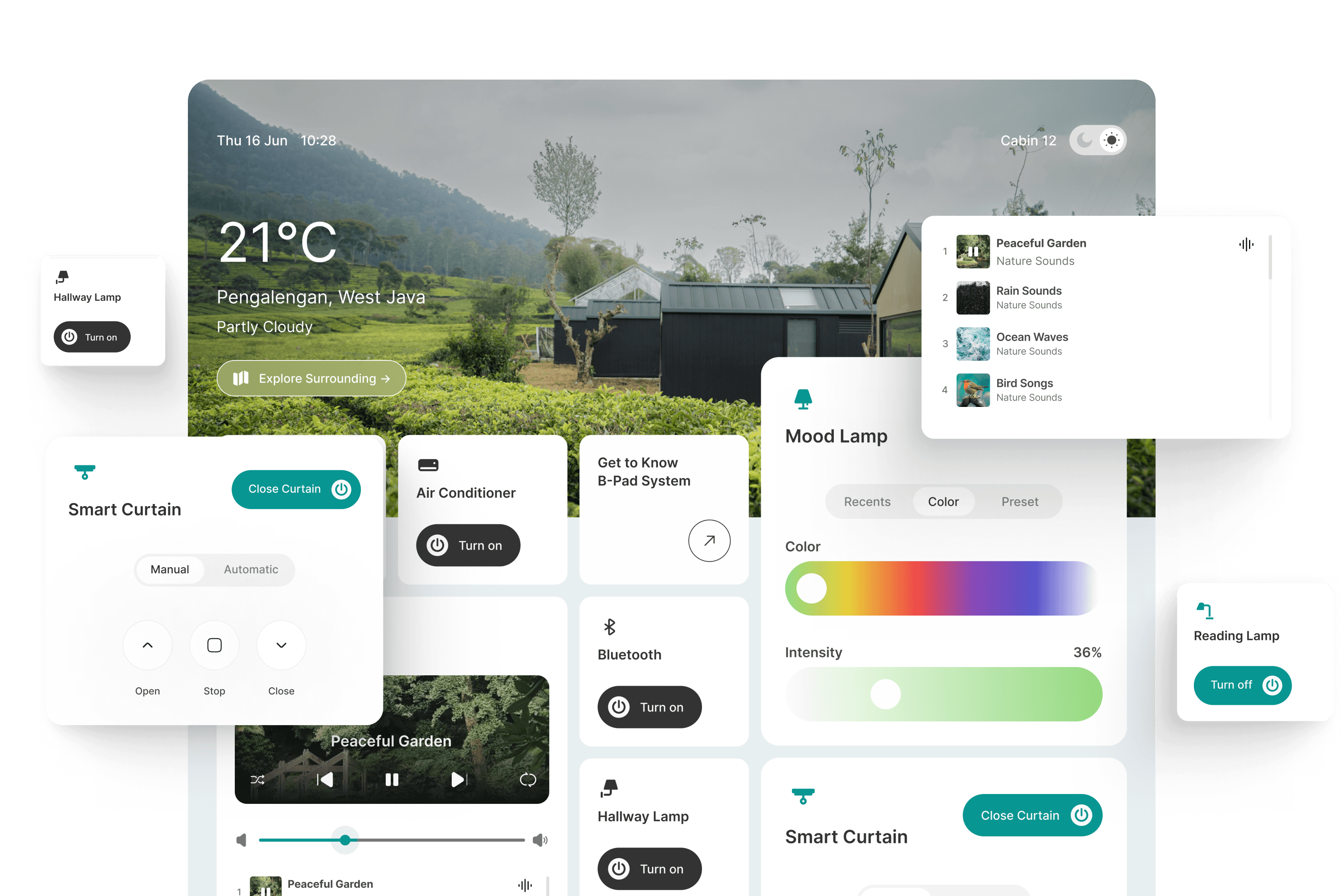
Revolutionizing tablet for IoT controller and beyond in hospitality.
Company
Bobobox
Time
Q3 of 2023
Scope
Design & Research
Design Category
Zero to One Product
OVERVIEW
Bobobox is a hospitality company that emphasizes the Internet of Things through a device called B-pad.
The current version is the first version of B-pad that ran on raspberry pi, initially aimed only for a full-indoor usage in capsule hotels or as we called it, Bobopod.
However, when the system was implemented on landscape sites to a different product—this time it’s a cabin called “Bobocabin”—we faced some difficulties in addressing what users needed from what once worked just fine in an indoor setting.
The new version of B-pad allows a more dynamic interaction between IoT devices to configure room preferences aligning each user's individual desires as well as boosting the new revenue streams.
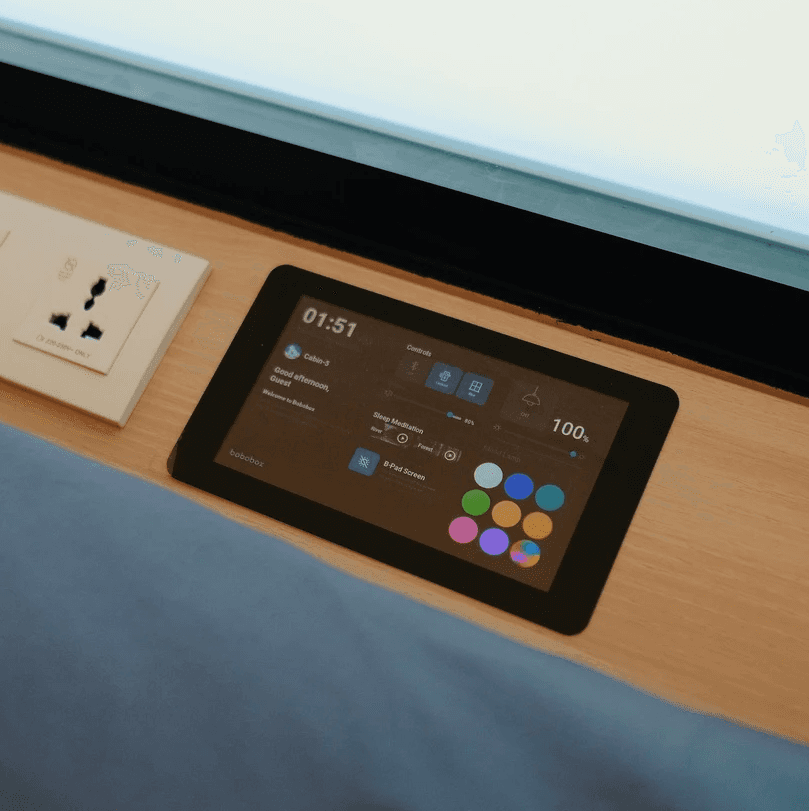
B-pad is a small device that functions as a controller of IoT devices in Bobocabin.
B-pad is placed near our user’s bed. It gives the user choices to control room preferences based on their own will without being away from bed.
OBJECTIVES
Allow users to personalize room based on their needs and create a ‘wow factor’ for new users to feel impressed and engaged with the space
Enable conversion for user to purchase add-ons like food and extra bed
Incorporate two-way communication between hosts and customers
Revamp & give a new haircut to the B-pad :)
Map out the new cabin series updates to bridge the connection to the new B-pad.
We did this by started collecting information that's circulating around the hub.
OBSERVING THINGS THAT USER DO
Users' activities in Bobocabin are divided into five categories
Through this, we could:
Map out a holistic view of activities users do throughout their trip
Highlight sub-categories that we can improve through B-pad
Curate content that will show up inside B-pad
HIGHLIGHTED PROBLEMS
While the patterns of activity for users are generally similar, each one of them has a personal preference and choice for the time, configuration, and desires that's different for each individual.
Even during urgent situations, users couldn't directly contact the host to solve their issues that relate to the cabin. Thus, when they need to check again on their requests, they also need to walk the same distance back and forth.
It's also becoming a big problem when the weather is bad but users want to order food. The effort to order and follow up their order to track the progress creates inconveniences for users whose trip intention is to relax and enjoy their time.
DESIGN PRINCIPLES
Principles on Designing a B-pad
From findings that I had earlier, I decided on a pretty straightforward principles to be the guide during the design process.
Simplicity
Simple enough for everyone to understand fast since the main room controller is in the B-pad.
Accessibility
Can be easily used for people with different demographics and broad range of ages.
Reliability
Performing well and consistently despite the weather, connection, and conditions.
Exploration: Swipeable three pages bento to introduce options during a trip to Bobocabin
The first sketch was made quickly to get a glimpse overview and was a part of the exploration, so some of the flow was not confirmed as plausible technically and physically, since the B-pad location inside the cabin was not yet set.
Exploration: Curated playlist with more to choose
Added a broad category for the music as well
Exploration: Host can broadcast messages to all cabins
Promoting activity choices for user during trip
However, I quickly learned that this format is not as simple and as straightforward as the previous all-in-one-page version.
While it is important to add ways to solve our user's problems, at the same time the challenge is to not increase the complexities of what's already built simple and easy to grasp beforehand.
MORE EXPLORATION
Exploration for Homepage: From three pages to an all-in-one page & finding the best color match.
Here, I tried to add all of the elements into one page by combining and simplifying the flow, aiming for compactness. I made a lot of explorations, from the homepage's visual look to the mood lamp's touch area.
Exploration: Layout Options for Mood Lamp Settings
Finding out which lamp settings will be the most suitable with device
Exploration: Mood Lamp Settings by Using Floor Plan
Floor plans help to draw context where each lamps are specifically.
One page that includes everything
From our earlier findings, we found that most users also had a similar pattern, so we provided scenes based on the common activities that they do.
Scenes allow user to save personalization even when they go to another branch. The personalization enclosed device controlling from lights, sound, and curtain, as well as the triggers activates the scene user personalized.
The new mood lamp allows user to choose lamp color directly from the spectrum.
Call Host
Cut the chase of the walking distance to a direct call with host from B-pad.
Rate Sleep Quality
User can keep notes on how well they sleep during each visit to Bobocabin.
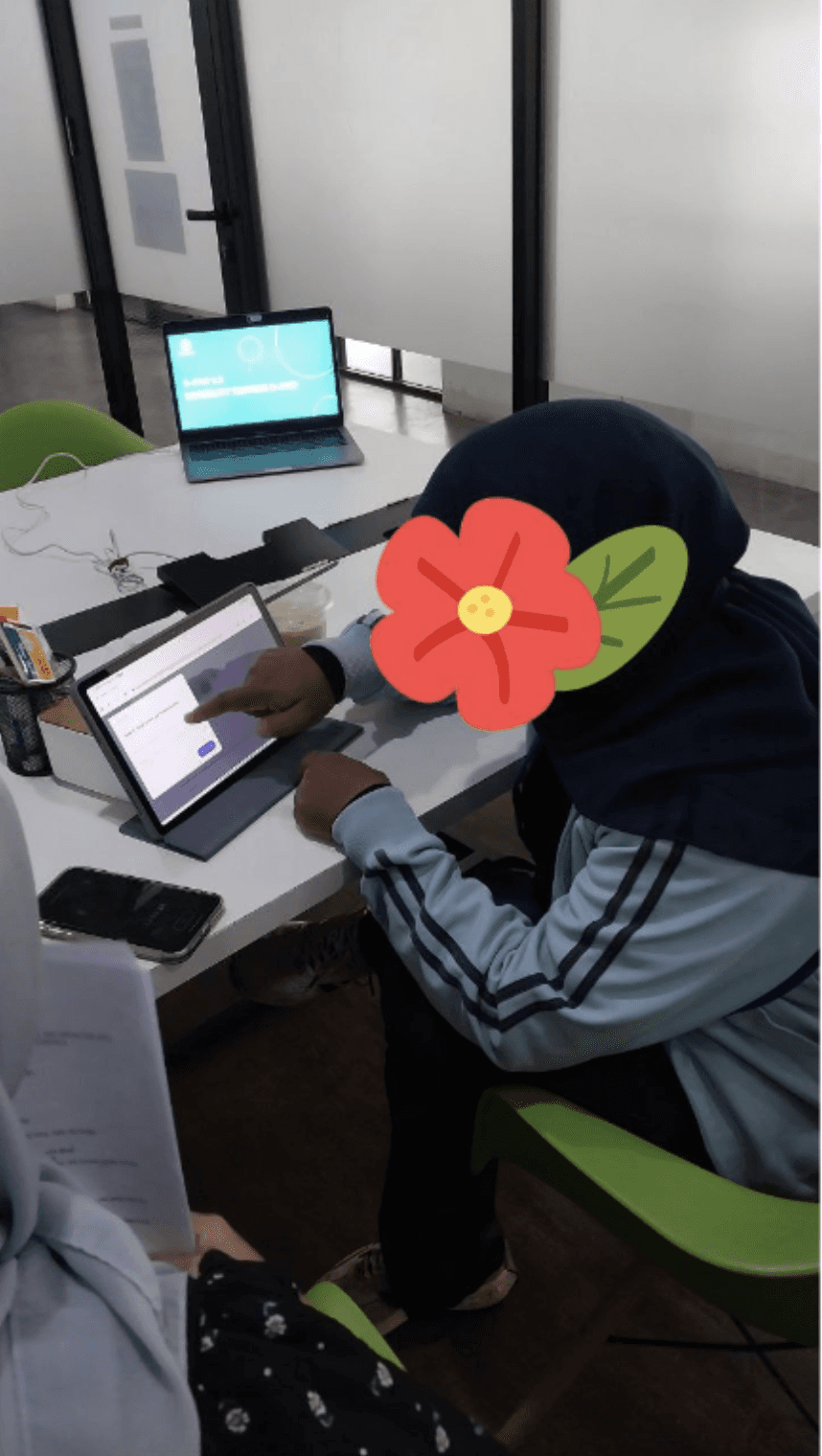
Usability testing results for our end users show several major drawbacks from proposed design.
Along with the UX researcher, I tested out the prototype to our end users to make sure first whether what we're building already meets their needs or not. As for the first proposed design, the spotlight of the problem relied on information overload.
The other things we found:
Exploring more visuals for the B-pad
Based on the valuable feedback gathered during the usability testing process, it is clear that there is significant potential for improvement. Specifically, enhancing the flow and design will better showcase the new abilities while effectively addressing previously identified issues.
Iteration: Option 1
Enhancement of the first proposed design with different proportioning.
For Option 1, the design improved the previous design by making things easier to grasp through visual cues that provide a different feedback behavior.
The more complex adjustment for mood lamps and smart curtains is highly distinguishable and not hidden through a different button.
At the same time, the other switch-only actions are grouped under the same parent (cabin control).
Iteration: Option 2
Much simpler and concise design with bigger touch area elements.
For Option 2, the design focuses on controlling the room by utilizing the dynamic screen on the right to further adjust the setting details.
Based on the testing conducted the user has a specific intention on when and how they want to perform a specific action.
Providing them with big, clear, and stand-out visual cues on the environment control gives a quicker context of each function inside their room.
Iteration: Option 3
More seamless approach on scrolling to provide a bigger context for our customers. (a.k.a the chosen one)
From field observations, the scrolling behavior is still plausible with the proposed tablet spec.
Thus, rather than discounting the number of capabilities, we can provide to our customers, expanding it with scrollable items is a great approach to address their needs without overloading them with information upfront.
Besides, the wallpaper can be personalized to be dynamic following the real field condition (e.g. when it rains, the wallpaper also shows the rain to represent the real condition).
B-PAD DESIGN 2.0 - THE FINAL ONE
Below, several highlighted flows from the new version is also included.
Turning on the scene with the loading process to smooth out the transition.
The grand visual to showcase real-life weather gives the impression of continuity of the window anresemblesng its part of the cabin. B-pad also functions as a wall piece of art that accentuates the furniture when it’s not being used.
By ordering in B-pad, user unlocks access to built-in murphy bed inside the cabin.
IMPACT & LESSON LEARNED
Right now our team is still developing the magic. That being said, the whole collaboration process was truly a delight. ✨
The new B-pad design created a new standard for a visual interface that can be brought to bridge the physical world with the digital one.
Not only do I work with Software Engineers, but I also collaborate with Internet of Things Engineers and Industrial Product Designers to deliver real-life seamless experiences for our customers.
This project also branches my experience not only in designing digital experiences but also in spatial design, working together with "design teams" from cross-function to ensure meaningful journeys beneath the surface.
It's a wrap! That's very kind of you for reading, scrolling, and making it this far. ❤️🔥
Continue to the next project?